Mittwoch, 29. Februar 2012

Take, pay, die

For me, working in an NGO, it is very interesting to observe the 'charity' or 'non-profit' initiatives of the business sector. Those are all called 'investments in the future' and benefit the company as much as the general public (nothing wrong with that, I guess, or is it?).

Tanzania does not seem to be soooo interesting for investments by the big international companies, but yesterday it was Merck, Germany, who made it to the front pages of the newspapers. The title in the Guardian was 'War against fake drugs gets boost' and Merck, through its Global Pharma Health Fund, donated five mobile compact-laboratories for detecting inferior and counterfeit medicines.

Fake drugs are a big problem in Tanzania, with Interpol reporting that as much as 30% of all drugs are fake. Still, I somehow doubt that mini-labs are going to change the situation dramatically. I mean, people are not buying fake drugs because they like them, but because the real ones are a) not accessible in the countryside, including major hospitals and clinics, b) so expensive that only a well-situated person can afford them. A usual set of vitamins from Europe or America costs about a quarter of a monthly salary of a cleaning lady. And a box of antibiotics from the West costs about half of her salary... So drugs produced in India or Asia are the only realistic alternative for majority of Tanzanians, and most of them are of a really good quality. 70% of them, anyway...

So, thank you, Merck, for the mini-labs, but maybe the pharma industries could start some kind of 'adjusting the price' talks?

Zu gut um wahr zu sein

Also, unser Himmel ist schon drei Tage lang bewoelkt. Gestern und vorgestern hat es geregnet und die Sonne konnte fuer ganze Stunden nicht die Wolkendecke brechen. Sofort nach dem Regen ist die Temperatur tatsaechlich unter 30 Grad gefallen und das ist ein Frischegefuehl den wir schon seit drei Monaten nicht mehr hatten. Wie im Himmel...

Also, koennte es sein, darf ich hoffen, dass die grosse Regenzeit einen ganzen Monat zu frueh angekommen ist und wir der hoellischen Hitze endlich entgehen werden? Das waere beinahe zu schoen um wahr zu sein...

Donnerstag, 23. Februar 2012

Geburtstag

Am Dienstag war ja mein Geburtstag - wir haben aber schon am Sonntag vorgefeiert...

Stefan hat mir einen Kuchen gebacken...

...einen Vanille-Erdbeer Kuchen, der ganz lecker ausgeschaut hat... (In dem Packerl hinter ihm ist eine Matte, fuer was Stefan 'Bopsch rauf/Bopsch runter' nennt, andere Menschen aber als Yoga kennen)

...und den wir auch ganz schnell verputzt haben!
Aber, das beste Geschaenk habe ich mir aufgehoben - ich kriege noch eine Live-Performance von meinem Liebliengssaenger!

Dienstag, 21. Februar 2012

The grey shades of democracy

Tanzania of course is a peaceful and democratic African country, yet living down here we are reminded every day, on occassions small and big, that democracy needs to be learnt...

Last month it was the National Muhimbili Hospital that was on the news day and night. The intern doctors, who were not paid out their allowances for quite some time now, decided to go on strike. Do you know what the State did? It fired them from their jobs, all forty plus of them! Then after the national health sytem came to a complete stop and people started yelling that their relatives are dying, the government brought in military doctors to do the most necessary dirty jobs. Well, the reason won at the end and by now all the doctors are reinstated, but it took more than a month and many official heads fell...

Doctors on strike
On a smaller scale, a screening of 'Johnny Mad Dog', a film about child soldiers in Sierra Leone, got cancelled yesterday in a local art gallery. The Tanzanian film board forbade the showing of the film on no grounds whatsoever. Now, I am not aware that Tanzania would be involved in the civil war in Sierra Leone in any kind of way, so what is the deal? Are they trying to protect the good reputation of african civil wars by forbidding to show children shooting around like mad dogs? Who knows, but the film is on the black list now.

Montag, 20. Februar 2012

Majhne radosti zivljenja

Na sluzbeni fronti je v Dar es Salaamu vse tiho in tudi doma se ne dogaja nic posebnega. Tako da se veseliva majhnih radosti zivljenja...

Izvedela sva, da v Tanzaniji, natancneje na severu, v Arushi, gojijo jagode! Ko sva jih prvic kupila, je bil to taksen praznik, da sva za zraven spekla se palacinke in cokoladen kolac. Sedaj mango ne bo vec vsak dan na jedilniku...

Najin cvetlicni koticek bujno cveti in se posebej najina roza bougenvilla se je odlocila, da je ZDAJ njen cas!

Uzivava tople vecere...

...impregnirana z vsemi vrstami strupov proti komarjem, ki mene zelo motijo, komarjve pa ocitno ne prevec!

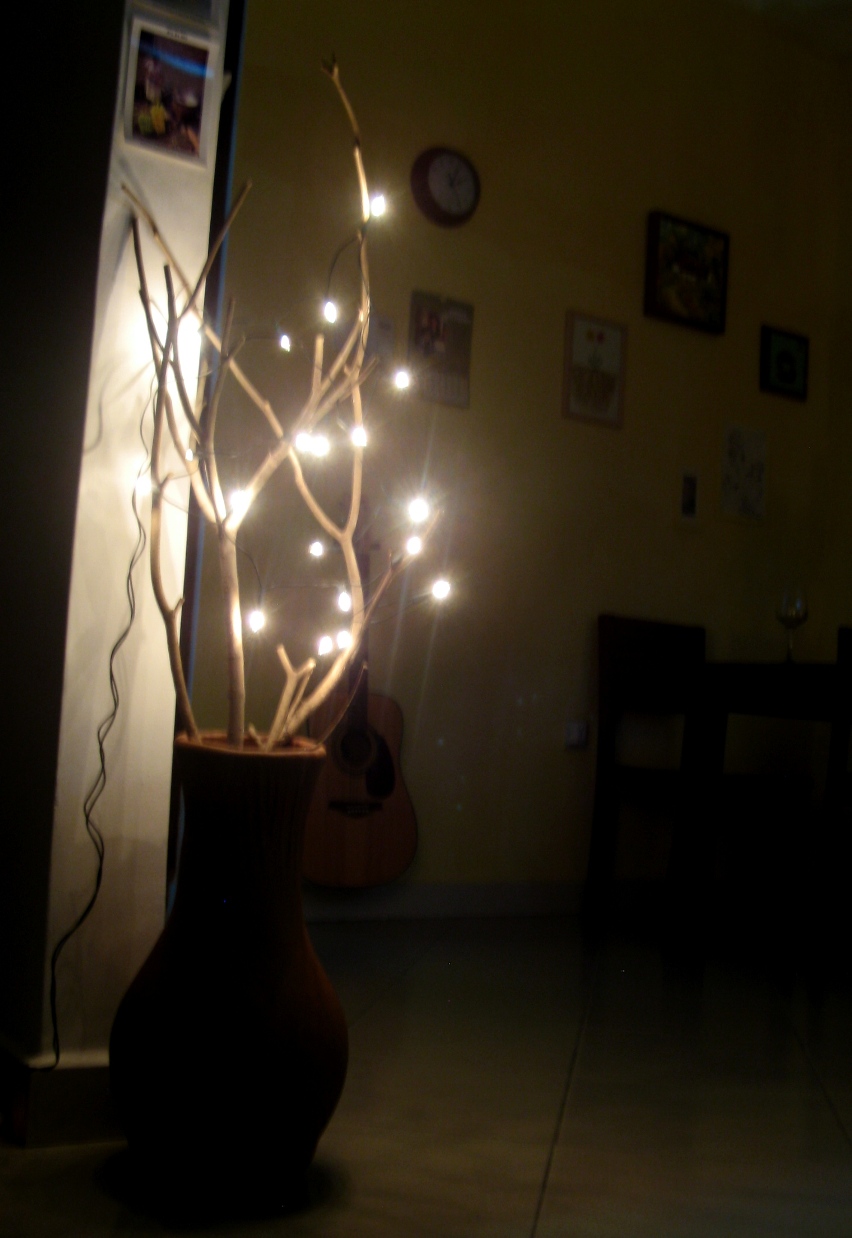
Tanzanijci ljubijo velike cevnate luci, ki oddajajo tako hladno svetlobo kot v bolnisnicah. Tako da sva si sSTefanom ze dolgo zelela kaksne prijetne, mehke namizne lucke - ampak te so v Daru zelo drage. Tako so najine bozicne lucke s pomocjo odrezanih vej oleandrov in glinene vaze napredovale v nov svetlobni objekt.

Montag, 6. Februar 2012

Teamarbeit

Das gute bei nicht zu strikten Arbeitsregeln in unserer Organisationen ist, dass Stefan und ich uns manchmal aushelfen koennen. Zum Beispiel hat Stefan ICD beim Plannen einer Data matrix in Excel geholfen und zwei Tage bei mir im Buero verbracht, und letzte Woche habe ich ihm geholfen beim Plannen eines Workshops, was mir leichter als ihm faellt. So haben wir einen guten Einblick in die Arbeit des Anderen, was ganz interessant ist, und ein Privileg den nicht viele arbeitende Paare geniessen koennen.

Lass uns losplannen!

Fit bleiben

Da die hohen Temperaturen der letzten Monate es beinahe verbieten, draussen irgendwelche koerperliche Aktivitaet zu tun, Stefan aber fest entschlossen ist, er muss fit bleiben/werden, schwitzt er jetzt in schoen runtergekuehltem Fitness-studio... Die sind in Dar es Salaam ziemlich beliebt und top ausgestattet, es fehlt ihnen nur an Athmosphaere - die Besitzer krammen all die Maschinen so eng zusammen, dass man nur mit Schwierigkeiten vorbei kommt! Die Besucher sind vielfaeltig, weiss sowie Afrikanisch, jung sowie alt, frau sowie man. Und ganz toll zu sehen ist wie auch staerkere Menschen brav trainieren - nicht um abzunehmen, sondern weil es ihnen Spass macht!


Aber man kann sich freilich auch anders rekreiren, zum Beispiel mit Gartenarbeit. Unsere Oleanderbuesche sind ja in der Zwischenzeit schon ueber zwei Meter gross und die Dschungel in ihren Blaettern ausgezeichnetes Versteck fuer Gelsen und alle Arten von kleinen Viechern. Also haben wir die unteren Zweige abgeschnitten, klaren Grund geschaffen und auch etwas Schatten unter ihren Kronen gewonnen... Stefan hat sich fuenf Blasen erarbeitet!

Mittwoch, 1. Februar 2012

Disability in Tanzania

Albinos are among the most endangered disabled people in Tanzania. They suffer skin lesions from the hot sun and are counted as disabled because of their very poor vision.

According to the traditional beliefs body parts of an albino are helpful in curing all kinds of illnesses, which is why albinos are being persecuted and killed by head hunters or paid killers. Witchdoctors inside and outside of Tanzania are their main customers. Killers will storm the houses of families with an albino member and chop off their legs or arms. The last really big and medially covered wave of the killings was in 2008, when many albinos left their homes and went into hiding into the bush.

Arms chopped off - lucky to be alive?
 Albinism in Tanzania is still such a stigma that traditional midwives will take away from the mother an albino newborn baby without showing it to her, take it away and kill it. Then they will return to the mother to tell her that her baby was born dead.

Are happier times to come? We don't know.

Mala znanost o komarjih

Moram priznati, da po priblizno dveh mesecih zivljenja v Afriki clovek nekako pozabi, da zivi pod stalno groznjo malarije - vsaj do naslednje dezevne sezone, ki pri nas nastopi sele aprila. Kljub temu je malarija definitivno tema, ki se ji ne da izogniti in hoces noces sva s Stefanom postala (skromna) eksperta za komarje.

Kot vsi vemo, malarijo prenasa le zenski del populacije komarjev Anopheles, tako da se z identifikacijo vrst ali druzin (ne vem tocno, kaj so), ki plesejo po najini hisi, lahko ne le prijetno zabavava, ampak tudi malo pomiriva, ko gleznji spet srbijo od pikov...


Aedes so najpogostejsa vrsta in najlepsi med komarji. So majhni in imajo crno - bele proge po telesu. Njihov let je neslisen in pikajo najraje v gleznje. Njihovi piki prve pol ure srbijo do nezavesti in vzplamenijo v mehurje.

Culex so najvecji, dlakasti in rjavi. Culex brencijo in tudi njihovi piki srbijo.

In koncno posast sama, Anopheles komarcica. Te je tezko opisati, so srednje velikosti, neslisni, imajo crno - bel vzorec na krilih in vedno pristanejo z zadnjo platjo v zraku. Piki nic ne srbijo in jih sploh ne opazis - razen da cel malo vec kot en teden lezis v postelji z malarijo!

Montag, 30. Januar 2012

Energy levels

What we always worry about in a workshop is to keep up the energy levels of the participants.

Obviously, it is food that gives us the fuel to keep going. Now, after one year I still marvel at the Tanzanian taste for food, so I just have to give you our daily menu.

Breakfast - milk tea, boiled eggs, chapati (similar to tortilla, but fried), maandazi (a local doughnut), toast bread, sausages, banana
Tea break - chapati with goat/beef stew
Lunch - ugali (polenta) & rice & pommes frites & cooked green bananas & tomato sauce & fried chicken & one tablespoon of stewed greenery & one slice of pineapple
Tea break - milk tea, fried potatoes, liver in a sauce

From  left to right - maandazi, vitumbua and chapati, all delicious and still dripping with oil
Anyone sees, like me, a slight lack of vitamins in the menu? Yes, Tanzanians have a high regard for fried carbohydrates and meat, and this in the 35 degrees heat! I guess you will understand why I gain three kilos after each week of a workshop...

Now, the other important thing at a workshop, to keep people from falling asleep after eating all this fried food, are the energizers. Our participants preferred energizers in the form of clapping hands. Let us clap once and twice and done! They also liked breathing - let us breathe in deeply and breathe out deeply and done! They also liked standing up, standing on the tops of their fingers for some seconds, and sitting down again. It really worked nicely for them, but it failed to energize me...


M & M & M & M

Dear all, I just returned from Mwanza, Tanzania's second largest city, in its most extreme West, on the shores of Lake Victoria, from doing my third cycle of action research.


The lovely Mwanza, a transport and business hub of west Tanzania, 450,000 people

Mwanza is also called the Rock City, because of weird rock formations in the lake Victoria. This one is named the Bismark Rock.

Up to know I have been to four small Tanzanian cities - Mbeya & Moshi & Morogoro & Mwanza, and I just can't help but wonder...

When I walk the streets of these cities, people don't mind me. Some greet respectfully, most just continue on their way. It almost makes me feel like just another normal person again.  In Dar, on the other side, I get called after non-stop, with all kinds of nonsense, such as 'Hey, Chinese girl!', 'Hey, pretty baby', 'Come to me, sweetie', 'I love you so much, white girl', 'Why are you not talking to me whitie', 'I need your money, rich girl' etc.

In M & M & M & M I walk to the fruit sellers and am told the correct price for my fruit immediately. In Dar, I get overcharged by 200% on a daily basis, even by the sellers with whome I buy regularly.

In Ms I can have a pleasant and interesting chat with friendly taxi drivers and they will even show me around the town for free. In Dar, taxi drivers are constantly in a sullen mood, will bargain with you until you drop dead or until you begin to wonder whether they want to do business at all and once on the road, they refuse to listen to you and bark back at you if you ask them to close the window or try not to hit people on the road.

In Ms the buses will drive a leisurely 40 km/h and will actually stop for you if you want to board or exit the bus. In Dar, buses speed around the corners, throwing you back and forth, and some will actually expect you to hop on or off while moving.

So what the hell is wrong with Dar?!

Mittwoch, 18. Januar 2012

Snapshots

The dala dala stations in Dar all have their own specific, weird and peculiar names. On my way home I pass Mugabe, Legho, Madukani, Makaburini and so on. It took me a long time to figure out that these bus stops are named after prominent buildings on the street - Mugabe pharmacy, Legho hotel, Madukani shop and Makaburini - by the cementery. It also took me a long time to figure out why on Earth is the bus stop in front of my office called Panther - Chui. This small sign in the middle of a huge sign forest tells it - our offices are guarded by the Chui Security Firm.

Mobile fruit sellers give Dar es Salaam people a chance of a healthy street snack - they carefully peel a juicy orange for you, cut it in half and then you stroll on sucking on it. It also helps against fainting because of the heat!

People are regularly hit by the cars on the Dar roads, but goats never. People say goats are clever in ducking the cars - does this mean the drivers are stupid?!

The banana market on my way to work is always busy and full of life - early in the morning truckloads of ndizi are being loaded on and off and on and off...

At the market entrance the road is so crammed with cars, trucks, bicycles, motorcycles and people that passing through becomes a work of art. That is the Dar es Salaam way of doing the SLALOM...

Freitag, 13. Januar 2012

Bankomat na dveh nogah

Ko sva bila s Stefanom v Ugandi, naju nesteti klici 'Mzungu, mzungu, give me my money' (Belec, belec, daj mi denar) niso tako zelo motili. Navsezadnje so ljudje na vasi resnicno revni, tudi v primerjavi z najrevnejsim prebivalcem Evrope, in navsezadnje beraciti ni greh. V Dar es Salaamu, temu velikemu mestu, pa nisva pricakovala toliko prosenj za denar... In res jih je manj, le da se razlikuje ne le kvantiteta, ampak tudi kvaliteta teh prosenj.

Na vasi so roke iztegovali ljudje v na pol raztrganih cunjah, prasni in sloki od nenehnega dela. V Dar es Salaamu pa beracenje poteka bolj sofisticirano... Zgodilo se mi je ze, da me je ustavil negovan, lepo oblecen mlad moski z vrecko iz pekarne v rokah, se vljudno predstavil in dodal, da je lacen, da nima denarja in ali mu lahko dam nekaj svojega bogastva? Meni ponavadi pride na pamet samo nasvet, naj proda svojo drago jakno ali pa morda poje pecivo iz vrecke, ki jo drzi v roki? Resnicno, kot belec se vcasih pocutim kot bankomat na dveh nogah!

Ampak ne samo bankomat, na splosno smo belci priloznost za boljse zivljenje na dveh nogah. Na zacetku mi je bilo vsec, da je v Tanzaniji povsem normalno nagovoriti mimoidocega na cesti in se z njim zaplesti v pogovor. Sedaj pa so me izkusnje naucile, da gredo vsi pogovori v isto smer... Zacne se z 'kako ti je ime', 'od kod prihajas', 'kje delas' in dodatkom, da bi govorca zelo veselilo izmenjati par idej s tabo. Te ideje se potem izkazejo za 'ali ima tvoja organizacija delo zame', 'kako lahko/tezko se pride v tvojo drzavo', 'mi lahko napises pismo, da bom lahko potoval v tvojo drzavo', 'mi lahko pomagas dobiti sluzbo v tvoji drzavi', 'tudi jaz imam svojo organizacijo in iscem financnega sponsorja'. Konca se seveda vse skupaj z velikim, dolgim in vztrajnim 'ZAKAJ NE?' in splosnim nerazumevanjem govorca nad rahlo slabo voljo, ki se zacne kazati pri meni in mojim pospesenim korakom. Ce ima bankomat dve nogi, jih lahko vsaj uporabi, a ne?

Mittwoch, 11. Januar 2012

The NGO business

Working for an NGO in a big city is quite different than working in the countryside.

In the countryside you have one, maybe two or three NGO's in one village, doing practical programmes with the people, whom you talk to daily. Maybe you have workshops with kids in the schools or you visit farmers and work on improving farming methods with them.

In Dar es Salaam there are thousands of NGO's, all doing the same undefinable, abstract thing - fighting for human rights. The programmes consist of awareness raising, capacity building and similar big sounding words and you may be here for a year and have never seen a disabled person, although working for a disabled people's organisation. Your work consists of writing plans and budgets and conducting workshops.

In the countryside people are very happy if they are invited to a workshop. They hope for new knowledge, some good company and a glimpse into the city life. They will travel incredible distances just to be there. They listen carefully and usually do decide to try out one or two heard things when they get back home.

In the city people are very stressed if they are invited to a workshop because they get several invitations weekly. They decide which one to visit based on where they will get more money (usually they are paid travelling and subsistence allowances, plus provided with free food and stationery). Sometimes they even hop from one workshop to another. Needless to say they can't really pay attention to what is being said and anyway, with all this workshop visiting to do, they never have time to implement any of the lessons learnt. The rule is that these people, who always come incredibly late and never hear what the workshop is really about, argue the loudest for their, usually irrelevant, arguments, and disturb anyone else in the room. Another rule is that the people who arrive half an hour before lunch complain the loudest that the lunch provided is not good.

So, it may be that NGO's in the countryside really do implement programmes that benefit people and improve their well-being and life situation. NGO's in the cities, however, seem merely to plan and educate themselves to be able to (sometimes in the very far future) implement some kind of activities. Many young, aspiring students decide to found an NGO after finishing school. This is usually not so much because they would be passionate about a cause, but because unemployment in Tanzania is over 70% and with even one small activity being supported by a donor they can maybe get themselves a salary for a year. When they do manage to get a job in say, two or three years, the NGO dies. So on average, I would say, from around 4000 NGO's in Dar, 1000 are functioning and 3000 are only names on paper.

Finding this blog not really objective and fair? It will not surprise you to learn that I just held a workshop yesterday, where five people out of fifteen showed up. Three came about two hours late and the other two just before lunch. Out of these five all were assistants or assistants' assistants of the people we invited, who, incidentally, all fifteen, confirmed their participation five days ago when we called them on the phone. Yes, the NGO business is tough.

Freitag, 6. Januar 2012

Heimweh

Heimweh aeussert sich manchmal in ganz besonderer Art und Weise. Jetzt, wo Dar es Salaam wirklich zu heiss zum Leben wird, bin ich betroffen.

Wir haben ja diesen tollen Kalender von den Wagners' bekommen, wo auf dem Jaennerfoto Niklas und Fabian in einer Schihuette eine Kaesekrainerwurst essen. So traeume ich seit dem 1. Jaenner ueber Krainerwurst... Ich kann hier Krebs in Kokonusssauce essen, oder sauren Mangosalat, oder Fisch so viel ich will, aber ich hab genug von bloeden Kokosnuessen, ich will halt eine Krainerwurst!

Hier kann man Wuerste selten finden im Geschaeft, und gemacht sind sie auf Swahili Art - mit Zimt, Nelken und Kardamom. Juck, bla, nichts da!

Stefan, auf der anderen Seite, kann zurzeit aufs Essen nicht mal denken. Er kann nicht schlafen, er kann nicht schlucken, und essen kann er schon gar nicht. Das ist auch Afrika - bei 35 Grad kriegt man mit Klima und kaltem Trinkwasser ratz fatz eine Halsentzuendung, mit Bakterien, die sein Koerper anscheinend noch nie gesehen hat! Ueber Nacht 40 Grad Fieber, zittert ganze Tage lang, schwitzt all die Waesche voll und geht rum wie ein Zombie - ja, zuhause waere es jetzt schoener.

Donnerstag, 29. Dezember 2011

DAS Geschenk

Endlich hat es das Christkind nach Afrika geschafft! In der Hitze, in der ich nicht mehr aus dem Haus gehen will, wobei im Haus es auch ungefähr 30 Grad hat, habe ich mir eine Klimaanlage gewünscht! Und gestern ist sie gekommen...

11.00 Uhr: Wir sind mit dem Stefan in einem Elektrogeschäft, von einem etwas verwirrtem, aber nettem Inder bedient. Er hat eine Klimaanlage, die nicht so sauteuer ist wie Samsung, LG oder das Ähnliche, und er meint, einen Techniker zum Installieren kann er heute noch kriegen. Die Installation dauert kurz, eine Stunde max. Wird ungefähr eine Stunde dauern, bis er da ist, ob wir warten können? Wir können.
13.00 Uhr: Nach einem Frisörbesuch und kleinem Snack sind wir zurück im Geschäft. Der Techniker ist immer noch auf dem Weg vom Kariakoo, er konnte kein Transport bekommen (im Kariakoo, 45 min Fahrt weg, wissen wir, gibt's jede Form von Transport auf jedem Eck). Wir schlagen vor, wir fahren nach Hause, und er schickt den Techniker direkt zu uns.
16.30 Uhr: Der Techniker kommt in typisch Tansanischer Art: je später, desto mehrere Menschen bringt er mit, in unserem Fall willkommen wir drei Techniker! Wie üblich, kommen sie ohne jegedliches Werkzeug, ohne Bohrer, ohne Leiter, ohne Material. Stefan bringt einen zum Markt, um das Material einzukaufen. In der Zwischenzeit versuchen die anderen zwei ein Loch in 10 cm Betonwand mit einem Schlaghammer zu machen. Das Haus vibriert und ist voll mit Staub.
18.30 Uhr: Es wird dunkel. Die Techniker würden gerne nach Hause gehen und morgen wieder kommen. Als wir den Chef Inder anrufen und sagen, wir zahlen erst wenn die Installation fertig ist, meint er, die Leute sollen heute fertig werden, weil möglicherweise kommen sie morgen überhaupt nicht. Schön, wie man seinen Leuten vertrauen kann, denken wir uns.
20.00 Uhr: Beinahe soweit. Aber, leider, beim letzten Verbindungskabel fehlt der Kabel. Es ist jetzt schon bissi spät für Geschäftebesuchen, aber was soll man anderes tun als sein Glück versuchen? Stefan dient wieder als Chauffeur als Mwenge Market zum zweiten mal aufgesucht wird.
20.15 Uhr: Glück gehabt, Kabel gefunden!
20.30 Uhr: Läppische vier Stunden Team-Arbeit sind vorbei (ohne Stefan's Motorrad, Leiter und Bohrer wäre wohl nicht so schnell gearbeitet), die Maschine ist drinnen, es funktioniert und das Haus kühlt allmähnlich runter! Wir verabschieden uns wie beste Freunde, 500 EUR sind weg und ein Tag gut investiert.

Zwei von drei Techniker mit ihrem Hammer vor unserer Betonwand

Die A/C noch am Boden liegend und wartend

YES!!! Der Wunder der modernen Technik bringt wieder Freude in mein Leben :)

Dienstag, 27. Dezember 2011

Heri ya Christmasi

Vesele in blagoslovljene bozicne praznike!

Schöne Weihnachten!

Merry Christmas!

Wir haben versucht, uns Weihnachten so schön zu gestalten, wie es nur geht. Aber in der Hitze ist das nicht leicht :)
Vielen, vielen Dank für all die lieben Geschenke aus Österreich. Wir haben uns riesig gefreut und haben an euch gedacht.

Najina mala cipresa je pogumno prevzela tezko okrasje na svoje sibke vejice...

We used sea shells, painted in the Tinga Tinga style, instead of the classical Christmas decor 

Die große 7-Finger-Muschel aus Zanzibar steht dem kleinen Jesus-kind gut, nicht wahr?

Freitag, 23. Dezember 2011

Zabe svatbo so imele

Po dezju pridejo na dan zabe - povsod po svetu in tudi v Dar es Salaamu, kjer sedaj skacejo po cestah in po nasih okenskih policah. Ceprav so mali skakaci podnevi cisto simpaticni, se ponoci spremenijo v moro. Kvakanje ene same male zabice, nic vec kot 5 cm velike, je dovolj, da ne moremo spati celo noc.

Ohropax, cepki za usesa, ki so dobro poznani po svoji ucinkovitosti in utisajo zvok kitare v sobi ali glasnega pogovora direktno pri postelji, niso kos kvakanju enega samega frogija! Morda od tod ime "bikova zaba" (bullfrog), ker tulijo tako glasno kot biki pri boju? Vsaka cast taksnim glasilkam :)

Donnerstag, 22. Dezember 2011

Dar is sinking

In Dar es Salaam it has been raining heavily for the last three days and the city is flooded! Me, the whole of ICD staff and thousands of other people were stuck at whichever place they happened to be when the roads got closed down, one after the other, after all the bridges got flooded with water. Thousands of homes were swept away, people could not return home from their offices, cars were stuck on the roads for hours.


I was on ICD annual retreat in Mbezi, on the outskirts of Dar, about 30 min drive from my home. Yet after the retreat was finished, there was no way to leave, because the bridge over Mbezi river (usually nothing but a small stream) got damaged.

My colleagues called all their friends to get info on passable ways - there were none. We spent an extra night at the hotel, watching the photos of Dar under water being shown on TV. On the next morning, we called in the people who really had the current infos (Tanzanian television is useless when it comes to informing): the taxi and bus drivers! They drove us to the bridge, where we dogded the army and joined hundreds of other people crossing the bridge on foot. On the other side buses were waiting to bring us to town.

The chain of people crossing Mbezi bridge on foot in heavy rain
What the TV did tell us is that these have been the heaviest rains since 1954.


Sonntag, 18. Dezember 2011

Besucher von zu Hause

Dieses Wochenende haben wir Bernie auf Zanzibar getroffen. Wir sind ganz in den Norden der Insel gefahren, nach Nungwi, uns rießig gefreut über seine Einladung, und ich kann euch sagen, die Jungs haben sich  ordentlich ausgeplaudert, in den Nächten, als ich schon im Bett war :)

Das Hotel war wirklich nobel!

Zanzibar hat sein Charm nicht verloren...

Nach der Hautfarbe zu beurteilen wäre ja Bernie derjenige, der schon am längsten in Tanzania ist :)