Montag, 29. August 2011

URLAAUUB!!!

Es ist doch tatsächlich schon mehr als ein halbes Jahr her seit Stefan und ich in Dar es Salaam wohnen und leben, also Zeit für einen Rückblick.

Unsere beiden Jobs sind herausfordernd und die Arbeit überhaupt nicht so, wie wir uns das erhofft haben.

Mit der Stadt haben wir uns jetzt schon einigermaßen arrangiert, wir kennen sie ziemlich gut und lernen auch langsam Freunde kennen.

Die städtliche Version der tansanischen Kultur aber sorgt immer noch für innere Unruhe. Wir wundern und ärgern uns täglich. Also, um ehrlich zu sein, stunden- und minutenweise. Zu Akzeptanz fehlt uns halt noch ein kleiner Schritt :)

Wir sind reif fürs Urlaub! Und den werden wir jetzt auch genießen, drei volle Wochen, um Abstand zu gewinnen, alles Erlebte neu bewerten, Energie tanken. Und das himmlische Wetter so richtig auszunutzen!
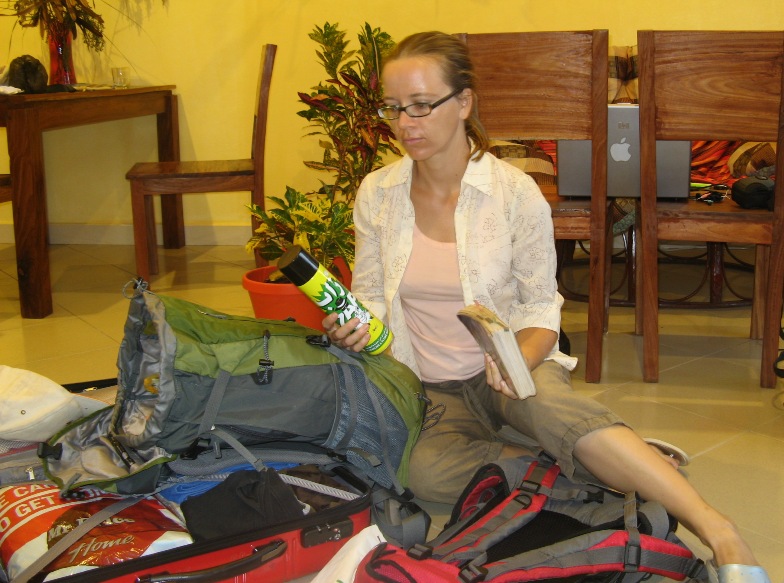
Nach dem letzten Jahr mag ich Packen nicht mehr: ich habe das Gefühl, ich tue es ständig. Packen und  wieder auspacken, Koffer in den Schrank und Koffer wieder raus, Rucksack hin und Rucksack her... 

Und wo geht's hin? Zu den Usumbara Bergen, eine sechs-stündige Fahrt nördlich von Dar es Salaam. Unser Ausgangspunkt wird Lushoto sein, ein kleiner Ort der mal als Sommerurlaubsort der deutschen Kolonialherren gedient hat. Usumbara Berge sind nicht Teil eines Nationalparks und deswegen viel billiger zu genießen. Sie bieten, jedoch, etliche Fußwege für kurze oder längere Wanderungen an. Unsere Bergschuhe werden endlich genutzt!


Nach dem Wandern wollen wir unseren Urlaub so richtig klassisch auf den Stränden abschließen. Zanzibar, Pemba, Mafia, Pangani - das ist hier die Frage...

Wünscht uns eine gute Reise und wir lesen uns wieder Mitte September!

Donnerstag, 25. August 2011

Wild, wild west

Our accountant is a calm lady of excellent upbringing, always composed and cool. So when we heard her screaming on Tuesday morning we all knew something serious is going on.

"They are invading my office, there are intruders there!" Who, why, what - we still don't know.

It seems that the owner of the building where ICD has its offices, is in a year long ownership / renting conflict with all its sub-tenants. The conflict is being handled by Tanzanian court, which actually means, the conflict is not being handled at all. Fed up with year of waiting, the owner has decided to take action, has rented bounty hunters (20 really strong and big guys from the street), has broken in all the tenants offices, ordered the staff out and manually and thoroughly removed all their belongings (office furniture, files, computers etc.) and thrown them out in the street.

There has been no notice to the tenants to move out, there has been use of force and dogs.

The police came, wrote many reports and went. The bounty hunters returned and finished the job.

So ICD is currently housed outside on the street and I am at home, wondering if I have landed in a western movie or what?

Montag, 22. August 2011

Temni casi

Stanje oskrbe z elektricno energijo se v Tanzaniji slabsa iz dneva v dan. Vecina podezelja tako ali tako nima povezave do elektricnega omrezja, ampak tudi v Dar es Salaamu, stiri milijonskem mestu, je velik del prebivalstva po 12 ur dnevno odrezan od elektricne energije. To dejstvo ima daljnosezne posledice, saj niso prikrajsani samo privatni domovi, ampak tudi podjetja. Predvsem proizvodnja hudo trpi, ce nima elektrike za pogon strojev.
Vzrok za to zalostno situacijo je samo eden, korupcija. Drzava je namenila dovolj denarja za proizvodnjo / nakup elektricne energije, le da ga je dvakrat zaporedoma zaupala laznim (neobstojecim) ponudnikom, ki so denar hitro preusmerili v druge, neizsledljive vode. Ne drzite me za besedo, kajti zgodba je kompleksna in porocanje tanzanijskih casopisov zmedeno, ampak izgleda, da mora drzava sedaj eni od teh laznih firm celo placati odskodnino, ker je po dveh letih, ko elektrike ni in ni bilo, koncno prekinila pogodbo z njo.

V svojem znacilnem slogu, polnem nasprotij, tanzanijski casopisi porocajo, da je primankljaj elektricne energije ze dosegel rekordnih 13 bilijonov TSh, in hkrati, da ima Tanzanija dovolj naravnega plina, da bo pricela elektricno energijo izvazati v sosednje drzave. Tako si bralci lahko mislijo, kar hocejo, ampak dejstvo ostaja, da so nasi veceri zelo mirni in temni in da pridno kupujemo svece in olje za petrolejke!


Donnerstag, 18. August 2011

Abhängig oder nicht abhängig, das ist die Frage

Diese Woche haben mein neuer Kollege Issa  und ich Wonder Welders, eine Werkstätte für Menschen mit Behinderung, besucht. Issa lernt jetzt gerade alles über seine neue Arbeit und da die Probleme der Menschen mit Behinderung in Tansania wirklich viele und traurige sind, habe ich mir gedacht, ein positiver Beispiel, ein erfolgreiches Unternehmen von Menschen mit Behinderung, kann nicht schaden.

Issa mit Magdalena, die recycltes Papier produziert, für Grußkarten. Zuerst schneidet sie Pappe in  kleine Stückchen, mischt sie mit Wasser. Dann gibt sie Bananen oder Ananasreste dazu (die binden die Masse zusammen). Die Mischung wird auf einen Holzrahmen mit Netz aufgetragen und trocknet dann in der Sonne, hat sie uns erzählt.
 Wonder Welders produzieren Souvenirs für Touristen und Produkte fürs Haus und alltägliches Bedarf aus Altmetal (und inzwischen auch schon aus Glas, Holz und Papier), das ihnen von großen Firmen aus Dar es Salaam gespendet wird. Sie folgen einem Trend: die Produkte der meisten Werkstätten sind für Verkauf an Touristen gedacht; Tansanier brauchen ja keine Souvenirs und kaufen in der Regel auch kein Deko.

Halsketten aus Altglas
Wonder Welders sind in einer Sache aber ganz besonders: der Erlös der Verkäufe ist hoch genug um alle Kosten, inklusive gute Gehälter der ungefähr 40 Mitarbeiter, zu decken. Ehrlich gesagt, ich habe bis jetzt noch von keinem anderen Unternehmen der Behinderten gehört, der selbst-erhaltend wäre!  Also war ich ganz gespannt drauf rauszufinden, wie sie das geschafft haben. Die Wahrheit ist unspektakulär: auch Wonder Welders sind, genauso wie alle andere Unternehmen, die gut laufen, von einem Weisen gegründet worden (der auch das Anfangskapital gesammelt hat). Fachpersonen aus Europa versorgen sie auch heute noch mit Design-Ideen und andersartiger Unterstützung.
Eine 'traditionelle' Maske aus Altmetal

Vielleicht denkt ihr, ich bin zu streng, wenn ich erwarte, dass Tansanier selbst was für sich tun und nicht völlig von ausländischer Hilfe abhängig sind. Aber ich kenne viele reiche Tansanier und sogar einen oder zwei reiche Tansanier mit Behinderung, die leider nicht daran denken, ihren weniger begünstigten Landesleuten zu helfen. Dafür gibt es halt die internationale Gemeinschaft.

Montag, 15. August 2011

Easy Riders

Our neighbours' kids just adore Stefan. Even the small Vako, who only knows how to say two words,'mummy' and 'daddy', has learnt to say 'Tefan' very fast.

You want to know why? Because they get to ride his motorbike!

Second hand is better than new

At some point or another the clothes brought from Europe to Africa wear out. Then it's time to go out and buy new ones.

'NEW' being a relative term here, as we actually only have two options. First, we can buy new Chinese clothes of much lower quality than what we are used to from Europe. Second, we can buy second hand (old) clothes from Europe. It took me and Stefan quite a while to believe the sellers when then tried to explain to us that second hand clothes are much, much, much better than new ones! But they are, because they come from Europe! All well, all good.

Now, the only problem is with shoes. It's not suuuch a nice feeling to wear second hand shoes. Luckily, it is the Masaai who come to our rescue! All Tanzanians, women and men alike, wear beautiful, shining, colourful, NEW and HAND MADE sandals of leather. They are decorated with beads (pearls) in all styles and patterns, originating from the traditional Masaai jewelry. Pretty to look at, great for the heat, durable and cheap. There is no way you can beat this combination!

Donnerstag, 11. August 2011

Gostje in dobrote iz Slovenije

S Stefanom sva se v torek razveselila prvega obiska iz domacih dezel. Tilen, Petra in Spela so srecno prispeli in so ze polno zaposleni z odkrivanjem Dar es Salaama, pogajanj za cene, opoldanske vrocine, lokalnih jedi, gnece na bazarju, revscine ljudi, tropskega sadja, krize goriva... Jutri zjutraj odrinejo na safari in nama bodo, tako upava, ob vrnitvi porocali samo o vznemirljivih dozivetjih.

Ena skupinska...

Hvala za vse dobrote, ki so prisle z njimi! Stefan se kar smeje, ko pogleda panceto, jaz pa, ko obcudujem svoje nove obleke. Res so cudovite, cisto po mojem okusu in tudi velikost je prava. Kot da bi bil Bozic!

Bozicno vzdusje...

Dienstag, 9. August 2011

Wie Gewuerze wachsen

Auf einer 'spice farm' in Zanzibar kann man vieles lernen...

Litchi ist eine suess-saure Frucht, die auf grossen Baeumen waechst. Mit deren tollen, rotten Schallen kann man vieles anstellen...

Muskatnuss sieht auf dem Baum so aus wie ein Pfirsich. Der Fleisch heisst in Billa dann Muskatnussblume... Und der Stein, den wuerde man auch nicht erkennen, mit einer brillant roten Maske aus Wachs, ueber die sich auch Batman freuen wuerde...

Vanille, die ist vielleicht teuer, aber fad. Haengt nur so nach unten, ist eine Liliane, die ohne einen Baum zur Unterstuetzung nicht wachsen kann.

Pfefferbaum ist ganz gross und stark, und sowas von Gruen! Und die Koerner, die haengen ganz delikat von den Aesten, so wie auf einem Kristbaum die Kugeln...
OK, Ananas ist kein Gewuerz, aber schon fesch zum Anschauen, als der Strauss die rote Bluete verliert und sie in die Frucht verwandelt.

Kakaofrucht selbst sieht zwar so aus wie ein Kuerbis, aber schon der Gedanke an das Endresultat (=Schokolade) bringt Wasser ins Mund.

Nelken sind romantische Seelen und moegen Pastelfarben, sie wandeln sich von hell Gruen ins Orange- und dann Dunkelrot, als sie bluehen. Fuer den Gewuerz muss man sie noch unreif pfluecken.

Zanzibar

On Friday we waved Dar es Salaam goodbye and took a ferry to Zanzibar for a long weekend (on Monday was Nane Nane, the Farmers' Day, a national holiday).

Bye, bye, the city of noise, dirt and traffic jams!
 Zanzibar greeted us with rain, being even more obvious because all the cafes, restaurants and food shops were closed. In the month of Ramadhan the Muslims fast and are not allowed to eat from sunrise to sundown. This motivated us for long walks in Stone Town, as there was nowhere to just rest and sit the rain out...

The old Arab fort

A shop producing traditional, heavily decorated, Zanzibar doors. The carved symbols testify to the wealth and the position of the owner of the house.

We couldn't wait to the evening, when the feasting began, straight after the 18.00hrs Muezzin call... In the Forodhani Gardens, a collection of stalls by the ocean, the cooks would ask us what they should grill for us, red snapper, kingfish, tuna, baracuda, shells, shrimps, octopus? These decisions were hard...

Street food Zanzibari style
And eventually the sun did come back and on our tour of the spice farms, which every good tourist must do, we even got a look at the beaches... For them, we are coming back!

All shades of blue...

Donnerstag, 4. August 2011

Hunger and aid

Some of you have asked us how are people in Tanzania dealing with the current hunger catastrophy in Somalia and Kenya. I can tell you one thing, it is not the way you are dealing with it in Europe.

The hunger situation is, of course, being written about in the newspapers, yet with the same stoic attitude that all other, minor hungers around Africa, which never make it to the European news, are being reported on. Situations of hunger here are as common as electricity shortages and no day passes without one or two happening somewhere in the region.

The pictures of Somalia and Kenya are not limited to starving children and never make it to page 1. Rather the headlines are about parliamentairy discussions on the new budget... My feeling is that Tanzania  and Tanzanians (also suffering a comparatively minor hunger situation in about 30% of its districts) are happy and relieved that this time it is not them who are dying en masse. They do not feel they have an obligation or capacity to help. Help per se is not being discussed.

What is being discussed are the more technical issues of the situation. Tanzanian government has prohibited export of food to the stricken areas because black market is thriving, but it has at the same time offered Kenyan government to approach it directly with their need for food aid (instead of doing so through private food dealers). This is contrary to the laws of the East African Union and is causing an up-roar.

Jutranji dez

Vreme v Dar es Salaamu je trenutno res cudovito, popolno - sonce, modro nebo, 20-30 stopinj Celzija, rahel veter... Tako smo ze malo pozabili na tezave dezevne sezone, pa nas je danes jutranja nevihta, ki je v 5 min uspela sklatiti  zleb s strehe, spet spomnila na moc dezja!

Sonntag, 31. Juli 2011

Makongo Juu

Dieses Wochenende haben wir gewandert! Wir haben uns gedacht, wir gehen einfach von zu Hause weg ins Unbekannte und checken mal, was es so im Hinterland von Dar es Salaam gibt. Auf unserer Karte hat es ganz vielversprechend ausgeschaut, dass sich hinter den 'residential areas' von Makongo (hinter unserem Haus) die große Grüne versteckt... Tropischer Wald, haben wir vermutet, toll!

Wir haben es auch bis dahin geschafft, in der Mittagshitze, da hat aber ein kleines Schild unser Enthusiasmus auf Null heruntergebracht:
Mit tansanischem Militär scherzt man lieber nicht...
Also, auf dem Umweg nach Hause! Da haben wir dann doch noch die Grüne gefunden, aber das Woodland, trockene Buschlandschaft...
Staubige Strassen, endloser Himmel und dornige Büsche - Afrika, wie wir sie kennen und lieben!
Vier Stunden haben wir gebracht, und es hat uns gefallen! Werden wir bald wiederholen :)
Happy und in Sonnenstichgefahr :)

Donnerstag, 28. Juli 2011

If you must go to school in East Africa, do it in Kenya

The majority of children in East Africa attend primary school. Still, on a closer look, the educational situation here is a disaster, mainly for two reasons: the absolutely horrible lack of teachers and materials and, as a consequence, the incredibly low quality of education the children receive.

Consider these facts:
In Tanzania, in the average,
·        58 children are being taught by 1 teacher,
·        63 children use 1 toilet,
·        77 children sit in 1 classroom.

When Tanzanian pupils of Grade 7 were given a Grade 2 test in English language only 50% passed! The results of the investigation published in the East African Magazine show that in Tanzania pupils who finish primary school have just about learnt what they should have mastered in second class, at the beginning of the primary school!
Tanzania, according to the research, has the worst educational standard in East Africa, Kenya being the best and followed by Uganda. Even in Kiswahili, Tanzania’s official and widely spoken language, Tanzania's pupils performed worse than those from Kenya and Uganda, where Kiswahili is not spoken nearly as much. 

Montag, 25. Juli 2011

Chaka Khan

Am Samstag war die Aufregung gross. Die grosse Chaka Khan ist nach Dar es Salaam gekommen und sollte ein Konzert in dem hesslichen Blue Pearl Hotel geben.


Gesagt getan haben wir uns Karten besorgt (der Stefan ist mit dem pikipiki die halbe Stadt umgefahren), weil Musik von Qualitat ist hier nicht leicht zu finden. Und Chaka Khan mit ihrer Reihe von Hits aus den 80'er, mit ihrer tiefen Stimme und Buehnenpraesenz fuer einen Spottpreis hoeren zu koennen war definitiv einige Fahrstunden wert!

Aber leider war der Konzert typisch afrikanisch - so laut, dass die Ohren innerhalb von 20 min voellig betaeubt waren, so laut, dass sich die tiefe, samtige Stimme der r'n'b Diva wie ein Katzengeschrei angehoert hat. Das Sound-system voellig ueberfordert...

Wir sind nach einer halbe Stunden veraergert nach Hause gegangen und waren eine halbe Stunde taub. Und Stefan hat geschworen, dass er nie, nie wieder auf einen Konzert in Tansania ohne Ohropax geht!

Baobab

Baobab je mogocno drevo, ki lahko zivi vec sto let. Ljudske legende pravijo, da je bil Bog tako nezadovoljen z okusom sadezev baobaba, da je drevo v svoji jezi izpulil iz zemlje in ga spet zasadil z krosnjo navzdol. Kadar baobab nima listov, njegova krosnja namrec spominja na korenine, in ta drugacna, zanimiva oblika mu je pridela ime 'narobe obrnjeno drevo'.

Baobab ima v tradiciji pomembno vlogo. V njegovem mogocnem deblu, pravih stenah, naj bi prebivali duhovi. In ker so vraci tisti, ki posredujejo med duhovi in ljudmi, vraci zelo radi sedijo pod baobabi, da so v druzbi sebi enakih... Kot lahko lepo vidite v Levjem kralju, kjer si je Rafiki, vrac, svoj dom uredil v krosnji baobaba.

Donnerstag, 21. Juli 2011

The (second) challenge for Africa ... the corrupt leadership


The second thing Wangari Maathai points out is that all the extra fast changes I discussed last time had one thing in common: condemning the traditional african cultures and explaining them as being primitive, demonic and old-fashioned.

Miss Maathai describes in detail the extent to which the colonial government went to erase traditional cultures from african people. She herself was re-named six times in her life depending on whether she went to catholic, protestant or any other kind of school. She lost her name and her identity six times at the will of strangers, a fate she shares with the rest of her countrypeople. What she knew as a child was that her culture is bad and she wants to be modern… She could not check out these facts, since african cultures are oral cultures and no books on them exist. With her grandmother died the last person in her family who knew what were the customs of the old days… The young Wangari found herself to be without any roots, any knowledge of who she is and where she comes from. Such an identity-loss leaves people empty and, most of all, insecure. People with no roots have one wish only in life: to feel safe. So getting a lot of money and gaining wealth becomes their outmost priority. It does not matter how egoistic they must be in their pursuit of richdom, since they do not feel connected to any other people.

There comes your explanation for the leaders of Africa, stashing billions of american dollars in foreign accounts and driving around towns with 25 cars lined one after the other while their poor citizens hunger… The leaders may be educated, rich and smart, but are just as rootless as the poorest of the poor! And there comes the explanation for the habit of cheating on fellow countrymen, no matter how much harm this does them, in the most egoistic and unethic manner. No question exists in Dar es Salaam ‘is what I am doing right?’, the only norm seems to be ‘I want to profit’. A very, very sad trend for people who used to live in solidary, egalitarian societies, where the community well-being came first. 

Montag, 18. Juli 2011

Kokos tukaj in kokos tam

V Tanzaniji je kokosova palma eno najpogostejsih dreves. Kokosovi orehi so zelo uporabni, tako v kuhinji kot v gospodarstvu. Ampak ce mislite, da je na obicajnih zelenjavnih trgih lahko kupiti kokosov oreh, se motite. S Stefanom sva se zelo cudila, zakaj se prodajalci cudijo, ko jih prosiva za kokosov oreh v popolnoma pravilnem Svahiliju...

Seveda zato, ker je oznak za razlicne vrste in stopnje zrelosti kokosovega oreha gotovo vec, kot je prstov na roki! Nekaj primerov...

kokosov oreh = nazi
mlad kokosov oreh = tale
nezrel kokosov oreh z veliko mleka = dafu
kokosove lupine = kozi
itd.

Se bolj zabavno je poslusati nasvete, kako je razlicne vrste kokosovih orehov najlazje odpreti... To je prava kokosova znanost!

Kokosova palma = mnazi

Donnerstag, 14. Juli 2011

Let's talk about...

In Bagamoyo we learnt a lot about slavery. It existed in Africa since 800 A.D. and it was the Arabs who were the major slave dealers. But it was in the times of the colonial rule that it grew beyond all proportions - in the late 19th century, for example, around a million and a half of people in East Africa were sold into slavery.

Bagamoyo was the end station of slave caravans coming from the interior of the country. From the port the people were shipped to the central slave market in Zanzibar, which was closed due to international pressure at the end of the 19th century. Yet slavery was abolished in Tanganyika only in 1920!

The freedom certificate of a slave from German East Africa, year 1905
African people do not like to discuss slavery. They don't learn about it in schools, there are no articles about it in the newspapers, it's simply not a topic... because 50% of all slaves in East Africa were owned by Africans themselves! This is a fact Africans can't handle, but it is a fact - wealthy african plantation owners depended on slave labour.

There was a research done in 2000 in Bagamoyo which clearly shows what deep wounds slavery caused in the lives of the people. Most of all it shows that these wounds have not yet healed and are influencing their lives even today.


Children of slaves and slave owners were interviewed and many slave owners reported, that the families of their ex-slaves still come to them to consult them when making important decisions, for example when they want to get married (it was the privilege of a slave owner to arrange a marriage for his slave)! After 90 years of freedom they still come to ask permission! It seems the behavioural dependency and relying on others to do your decisions continues into the present. Also, many people in Bagamoyo live torn between two worlds, being children of slaves and slave owners at the same time, since many slave masters had their female slave concubines. How do you deal emotionally with this trauma when you belong to the victim and the perpetrator at the same time?

Montag, 11. Juli 2011

Bagamoyo

Also, fuer ein Relax-wochenende auf dem Strand waren wir, kann ich stolz berichten, durchaus aktiv. Kein Wunder, denn der Strand hat leider so ausgeschaut...
Friedhofen der Plastiksackerl?
So war liegen auf dem weissen Sand eher nicht DAS Ding, aber wir haben trotzdem vieles in Bagamoyo genossen. Aber beginnen wir am Anfang.

Donnerstag frueh haben wir die Blumen gegossen, den Motorrad vollgepackt, und los is gegangen in die Ferne! Nach zwei Stunden von Sonne und Wind im Gesicht...

...war der Ziel erreicht...

...und der Fahrer kaputt!


Unser Tagesprogramm war ziemlich anspruchsvoll. Ein Morgenspaziergang auf dem Strand, um die aus dem Meer zurueckkehrenden Dhows zu beobachten und den Menschen zuzuschauen, wie sie die frischen Fische ersteigern...
Links die Dhows, rechts das alte deutsche Zollhaus, dazwischen Menschen, die gerne Fisch essen wuerden...
Ein Abendsspaziergang auf dem Strand um den Sonnenuntergang zu geniessen und die Fischer zu beobachten, wie sie ihre Dhows fuers naechtliche Fischen vollladen...


Zusaetzlich haben wir tagsueber die Geschichte des einst bluehenden Stadtes, der der Endpunkt fuer Sklavenkaravanen aus dem Inland Tanganyikas war, erforscht. Viel ueber Sklaverei erfahren, ...

...sich die Ueberreste der alten deutsch-kolonialen Gebaeude angeschaut (auf dem Photo das Zollhaus)...

...ein paar Heller gekauft (auf dem Photo Muenzen der Deutsch-Ostafrika, 1894 & 1904)...
...
...die Ruinen der Siedlung, die vor Bagamoyo existiert hat, Kaole aus dem 13. Jahrhundert (auf dem Photo eine Moschee des Shiraz Volkes, Persien), bewundert.
 Und die Ausblicke, die wahren einfach ein Wahnsinn!


Auf dem Weg zurueck nach Dar haben wir noch einen Abstecher gemacht und meine Arbeitskollegin Grace mit Familie besucht. Gibt es ueberhaupt ein besseres Ende eines langen Wochenendes als ein tolles Mittagessen mit Freunden?