Montag, 30. Januar 2012

Energy levels

What we always worry about in a workshop is to keep up the energy levels of the participants.

Obviously, it is food that gives us the fuel to keep going. Now, after one year I still marvel at the Tanzanian taste for food, so I just have to give you our daily menu.

Breakfast - milk tea, boiled eggs, chapati (similar to tortilla, but fried), maandazi (a local doughnut), toast bread, sausages, banana
Tea break - chapati with goat/beef stew
Lunch - ugali (polenta) & rice & pommes frites & cooked green bananas & tomato sauce & fried chicken & one tablespoon of stewed greenery & one slice of pineapple
Tea break - milk tea, fried potatoes, liver in a sauce

From  left to right - maandazi, vitumbua and chapati, all delicious and still dripping with oil
Anyone sees, like me, a slight lack of vitamins in the menu? Yes, Tanzanians have a high regard for fried carbohydrates and meat, and this in the 35 degrees heat! I guess you will understand why I gain three kilos after each week of a workshop...

Now, the other important thing at a workshop, to keep people from falling asleep after eating all this fried food, are the energizers. Our participants preferred energizers in the form of clapping hands. Let us clap once and twice and done! They also liked breathing - let us breathe in deeply and breathe out deeply and done! They also liked standing up, standing on the tops of their fingers for some seconds, and sitting down again. It really worked nicely for them, but it failed to energize me...


M & M & M & M

Dear all, I just returned from Mwanza, Tanzania's second largest city, in its most extreme West, on the shores of Lake Victoria, from doing my third cycle of action research.


The lovely Mwanza, a transport and business hub of west Tanzania, 450,000 people

Mwanza is also called the Rock City, because of weird rock formations in the lake Victoria. This one is named the Bismark Rock.

Up to know I have been to four small Tanzanian cities - Mbeya & Moshi & Morogoro & Mwanza, and I just can't help but wonder...

When I walk the streets of these cities, people don't mind me. Some greet respectfully, most just continue on their way. It almost makes me feel like just another normal person again.  In Dar, on the other side, I get called after non-stop, with all kinds of nonsense, such as 'Hey, Chinese girl!', 'Hey, pretty baby', 'Come to me, sweetie', 'I love you so much, white girl', 'Why are you not talking to me whitie', 'I need your money, rich girl' etc.

In M & M & M & M I walk to the fruit sellers and am told the correct price for my fruit immediately. In Dar, I get overcharged by 200% on a daily basis, even by the sellers with whome I buy regularly.

In Ms I can have a pleasant and interesting chat with friendly taxi drivers and they will even show me around the town for free. In Dar, taxi drivers are constantly in a sullen mood, will bargain with you until you drop dead or until you begin to wonder whether they want to do business at all and once on the road, they refuse to listen to you and bark back at you if you ask them to close the window or try not to hit people on the road.

In Ms the buses will drive a leisurely 40 km/h and will actually stop for you if you want to board or exit the bus. In Dar, buses speed around the corners, throwing you back and forth, and some will actually expect you to hop on or off while moving.

So what the hell is wrong with Dar?!

Mittwoch, 18. Januar 2012

Snapshots

The dala dala stations in Dar all have their own specific, weird and peculiar names. On my way home I pass Mugabe, Legho, Madukani, Makaburini and so on. It took me a long time to figure out that these bus stops are named after prominent buildings on the street - Mugabe pharmacy, Legho hotel, Madukani shop and Makaburini - by the cementery. It also took me a long time to figure out why on Earth is the bus stop in front of my office called Panther - Chui. This small sign in the middle of a huge sign forest tells it - our offices are guarded by the Chui Security Firm.

Mobile fruit sellers give Dar es Salaam people a chance of a healthy street snack - they carefully peel a juicy orange for you, cut it in half and then you stroll on sucking on it. It also helps against fainting because of the heat!

People are regularly hit by the cars on the Dar roads, but goats never. People say goats are clever in ducking the cars - does this mean the drivers are stupid?!

The banana market on my way to work is always busy and full of life - early in the morning truckloads of ndizi are being loaded on and off and on and off...

At the market entrance the road is so crammed with cars, trucks, bicycles, motorcycles and people that passing through becomes a work of art. That is the Dar es Salaam way of doing the SLALOM...

Freitag, 13. Januar 2012

Bankomat na dveh nogah

Ko sva bila s Stefanom v Ugandi, naju nesteti klici 'Mzungu, mzungu, give me my money' (Belec, belec, daj mi denar) niso tako zelo motili. Navsezadnje so ljudje na vasi resnicno revni, tudi v primerjavi z najrevnejsim prebivalcem Evrope, in navsezadnje beraciti ni greh. V Dar es Salaamu, temu velikemu mestu, pa nisva pricakovala toliko prosenj za denar... In res jih je manj, le da se razlikuje ne le kvantiteta, ampak tudi kvaliteta teh prosenj.

Na vasi so roke iztegovali ljudje v na pol raztrganih cunjah, prasni in sloki od nenehnega dela. V Dar es Salaamu pa beracenje poteka bolj sofisticirano... Zgodilo se mi je ze, da me je ustavil negovan, lepo oblecen mlad moski z vrecko iz pekarne v rokah, se vljudno predstavil in dodal, da je lacen, da nima denarja in ali mu lahko dam nekaj svojega bogastva? Meni ponavadi pride na pamet samo nasvet, naj proda svojo drago jakno ali pa morda poje pecivo iz vrecke, ki jo drzi v roki? Resnicno, kot belec se vcasih pocutim kot bankomat na dveh nogah!

Ampak ne samo bankomat, na splosno smo belci priloznost za boljse zivljenje na dveh nogah. Na zacetku mi je bilo vsec, da je v Tanzaniji povsem normalno nagovoriti mimoidocega na cesti in se z njim zaplesti v pogovor. Sedaj pa so me izkusnje naucile, da gredo vsi pogovori v isto smer... Zacne se z 'kako ti je ime', 'od kod prihajas', 'kje delas' in dodatkom, da bi govorca zelo veselilo izmenjati par idej s tabo. Te ideje se potem izkazejo za 'ali ima tvoja organizacija delo zame', 'kako lahko/tezko se pride v tvojo drzavo', 'mi lahko napises pismo, da bom lahko potoval v tvojo drzavo', 'mi lahko pomagas dobiti sluzbo v tvoji drzavi', 'tudi jaz imam svojo organizacijo in iscem financnega sponsorja'. Konca se seveda vse skupaj z velikim, dolgim in vztrajnim 'ZAKAJ NE?' in splosnim nerazumevanjem govorca nad rahlo slabo voljo, ki se zacne kazati pri meni in mojim pospesenim korakom. Ce ima bankomat dve nogi, jih lahko vsaj uporabi, a ne?

Mittwoch, 11. Januar 2012

The NGO business

Working for an NGO in a big city is quite different than working in the countryside.

In the countryside you have one, maybe two or three NGO's in one village, doing practical programmes with the people, whom you talk to daily. Maybe you have workshops with kids in the schools or you visit farmers and work on improving farming methods with them.

In Dar es Salaam there are thousands of NGO's, all doing the same undefinable, abstract thing - fighting for human rights. The programmes consist of awareness raising, capacity building and similar big sounding words and you may be here for a year and have never seen a disabled person, although working for a disabled people's organisation. Your work consists of writing plans and budgets and conducting workshops.

In the countryside people are very happy if they are invited to a workshop. They hope for new knowledge, some good company and a glimpse into the city life. They will travel incredible distances just to be there. They listen carefully and usually do decide to try out one or two heard things when they get back home.

In the city people are very stressed if they are invited to a workshop because they get several invitations weekly. They decide which one to visit based on where they will get more money (usually they are paid travelling and subsistence allowances, plus provided with free food and stationery). Sometimes they even hop from one workshop to another. Needless to say they can't really pay attention to what is being said and anyway, with all this workshop visiting to do, they never have time to implement any of the lessons learnt. The rule is that these people, who always come incredibly late and never hear what the workshop is really about, argue the loudest for their, usually irrelevant, arguments, and disturb anyone else in the room. Another rule is that the people who arrive half an hour before lunch complain the loudest that the lunch provided is not good.

So, it may be that NGO's in the countryside really do implement programmes that benefit people and improve their well-being and life situation. NGO's in the cities, however, seem merely to plan and educate themselves to be able to (sometimes in the very far future) implement some kind of activities. Many young, aspiring students decide to found an NGO after finishing school. This is usually not so much because they would be passionate about a cause, but because unemployment in Tanzania is over 70% and with even one small activity being supported by a donor they can maybe get themselves a salary for a year. When they do manage to get a job in say, two or three years, the NGO dies. So on average, I would say, from around 4000 NGO's in Dar, 1000 are functioning and 3000 are only names on paper.

Finding this blog not really objective and fair? It will not surprise you to learn that I just held a workshop yesterday, where five people out of fifteen showed up. Three came about two hours late and the other two just before lunch. Out of these five all were assistants or assistants' assistants of the people we invited, who, incidentally, all fifteen, confirmed their participation five days ago when we called them on the phone. Yes, the NGO business is tough.

Freitag, 6. Januar 2012

Heimweh

Heimweh aeussert sich manchmal in ganz besonderer Art und Weise. Jetzt, wo Dar es Salaam wirklich zu heiss zum Leben wird, bin ich betroffen.

Wir haben ja diesen tollen Kalender von den Wagners' bekommen, wo auf dem Jaennerfoto Niklas und Fabian in einer Schihuette eine Kaesekrainerwurst essen. So traeume ich seit dem 1. Jaenner ueber Krainerwurst... Ich kann hier Krebs in Kokonusssauce essen, oder sauren Mangosalat, oder Fisch so viel ich will, aber ich hab genug von bloeden Kokosnuessen, ich will halt eine Krainerwurst!

Hier kann man Wuerste selten finden im Geschaeft, und gemacht sind sie auf Swahili Art - mit Zimt, Nelken und Kardamom. Juck, bla, nichts da!

Stefan, auf der anderen Seite, kann zurzeit aufs Essen nicht mal denken. Er kann nicht schlafen, er kann nicht schlucken, und essen kann er schon gar nicht. Das ist auch Afrika - bei 35 Grad kriegt man mit Klima und kaltem Trinkwasser ratz fatz eine Halsentzuendung, mit Bakterien, die sein Koerper anscheinend noch nie gesehen hat! Ueber Nacht 40 Grad Fieber, zittert ganze Tage lang, schwitzt all die Waesche voll und geht rum wie ein Zombie - ja, zuhause waere es jetzt schoener.

Donnerstag, 29. Dezember 2011

DAS Geschenk

Endlich hat es das Christkind nach Afrika geschafft! In der Hitze, in der ich nicht mehr aus dem Haus gehen will, wobei im Haus es auch ungefähr 30 Grad hat, habe ich mir eine Klimaanlage gewünscht! Und gestern ist sie gekommen...

11.00 Uhr: Wir sind mit dem Stefan in einem Elektrogeschäft, von einem etwas verwirrtem, aber nettem Inder bedient. Er hat eine Klimaanlage, die nicht so sauteuer ist wie Samsung, LG oder das Ähnliche, und er meint, einen Techniker zum Installieren kann er heute noch kriegen. Die Installation dauert kurz, eine Stunde max. Wird ungefähr eine Stunde dauern, bis er da ist, ob wir warten können? Wir können.
13.00 Uhr: Nach einem Frisörbesuch und kleinem Snack sind wir zurück im Geschäft. Der Techniker ist immer noch auf dem Weg vom Kariakoo, er konnte kein Transport bekommen (im Kariakoo, 45 min Fahrt weg, wissen wir, gibt's jede Form von Transport auf jedem Eck). Wir schlagen vor, wir fahren nach Hause, und er schickt den Techniker direkt zu uns.
16.30 Uhr: Der Techniker kommt in typisch Tansanischer Art: je später, desto mehrere Menschen bringt er mit, in unserem Fall willkommen wir drei Techniker! Wie üblich, kommen sie ohne jegedliches Werkzeug, ohne Bohrer, ohne Leiter, ohne Material. Stefan bringt einen zum Markt, um das Material einzukaufen. In der Zwischenzeit versuchen die anderen zwei ein Loch in 10 cm Betonwand mit einem Schlaghammer zu machen. Das Haus vibriert und ist voll mit Staub.
18.30 Uhr: Es wird dunkel. Die Techniker würden gerne nach Hause gehen und morgen wieder kommen. Als wir den Chef Inder anrufen und sagen, wir zahlen erst wenn die Installation fertig ist, meint er, die Leute sollen heute fertig werden, weil möglicherweise kommen sie morgen überhaupt nicht. Schön, wie man seinen Leuten vertrauen kann, denken wir uns.
20.00 Uhr: Beinahe soweit. Aber, leider, beim letzten Verbindungskabel fehlt der Kabel. Es ist jetzt schon bissi spät für Geschäftebesuchen, aber was soll man anderes tun als sein Glück versuchen? Stefan dient wieder als Chauffeur als Mwenge Market zum zweiten mal aufgesucht wird.
20.15 Uhr: Glück gehabt, Kabel gefunden!
20.30 Uhr: Läppische vier Stunden Team-Arbeit sind vorbei (ohne Stefan's Motorrad, Leiter und Bohrer wäre wohl nicht so schnell gearbeitet), die Maschine ist drinnen, es funktioniert und das Haus kühlt allmähnlich runter! Wir verabschieden uns wie beste Freunde, 500 EUR sind weg und ein Tag gut investiert.

Zwei von drei Techniker mit ihrem Hammer vor unserer Betonwand

Die A/C noch am Boden liegend und wartend

YES!!! Der Wunder der modernen Technik bringt wieder Freude in mein Leben :)

Dienstag, 27. Dezember 2011

Heri ya Christmasi

Vesele in blagoslovljene bozicne praznike!

Schöne Weihnachten!

Merry Christmas!

Wir haben versucht, uns Weihnachten so schön zu gestalten, wie es nur geht. Aber in der Hitze ist das nicht leicht :)
Vielen, vielen Dank für all die lieben Geschenke aus Österreich. Wir haben uns riesig gefreut und haben an euch gedacht.

Najina mala cipresa je pogumno prevzela tezko okrasje na svoje sibke vejice...

We used sea shells, painted in the Tinga Tinga style, instead of the classical Christmas decor 

Die große 7-Finger-Muschel aus Zanzibar steht dem kleinen Jesus-kind gut, nicht wahr?

Freitag, 23. Dezember 2011

Zabe svatbo so imele

Po dezju pridejo na dan zabe - povsod po svetu in tudi v Dar es Salaamu, kjer sedaj skacejo po cestah in po nasih okenskih policah. Ceprav so mali skakaci podnevi cisto simpaticni, se ponoci spremenijo v moro. Kvakanje ene same male zabice, nic vec kot 5 cm velike, je dovolj, da ne moremo spati celo noc.

Ohropax, cepki za usesa, ki so dobro poznani po svoji ucinkovitosti in utisajo zvok kitare v sobi ali glasnega pogovora direktno pri postelji, niso kos kvakanju enega samega frogija! Morda od tod ime "bikova zaba" (bullfrog), ker tulijo tako glasno kot biki pri boju? Vsaka cast taksnim glasilkam :)

Donnerstag, 22. Dezember 2011

Dar is sinking

In Dar es Salaam it has been raining heavily for the last three days and the city is flooded! Me, the whole of ICD staff and thousands of other people were stuck at whichever place they happened to be when the roads got closed down, one after the other, after all the bridges got flooded with water. Thousands of homes were swept away, people could not return home from their offices, cars were stuck on the roads for hours.


I was on ICD annual retreat in Mbezi, on the outskirts of Dar, about 30 min drive from my home. Yet after the retreat was finished, there was no way to leave, because the bridge over Mbezi river (usually nothing but a small stream) got damaged.

My colleagues called all their friends to get info on passable ways - there were none. We spent an extra night at the hotel, watching the photos of Dar under water being shown on TV. On the next morning, we called in the people who really had the current infos (Tanzanian television is useless when it comes to informing): the taxi and bus drivers! They drove us to the bridge, where we dogded the army and joined hundreds of other people crossing the bridge on foot. On the other side buses were waiting to bring us to town.

The chain of people crossing Mbezi bridge on foot in heavy rain
What the TV did tell us is that these have been the heaviest rains since 1954.


Sonntag, 18. Dezember 2011

Besucher von zu Hause

Dieses Wochenende haben wir Bernie auf Zanzibar getroffen. Wir sind ganz in den Norden der Insel gefahren, nach Nungwi, uns rießig gefreut über seine Einladung, und ich kann euch sagen, die Jungs haben sich  ordentlich ausgeplaudert, in den Nächten, als ich schon im Bett war :)

Das Hotel war wirklich nobel!

Zanzibar hat sein Charm nicht verloren...

Nach der Hautfarbe zu beurteilen wäre ja Bernie derjenige, der schon am längsten in Tanzania ist :)

Sonntag, 11. Dezember 2011

Uluguru Berge

Nach der zweiten Woche von Action Research war glücklicherweise ein Feiertag und Stefan ist zu mir nach Morogoro gekommen. Die kleine Stadt liegt am Fuss von Uluguru Bergen und wir wollten die erobern...

Aber leichter gesagt als getan! Unser Führer Lemmick, der mit normalen Straßenschuhen gegangen ist und dem nicht mal richtig heiß geworden ist, hat uns so steile und kleine Wege raufgeführt, dass wir nicht die Zeit hatten, rumzuschauen oder zu atmen. Nach cca 1000 Höhenmetern in vier Stunden, Luftfeuchtigkeit von 100% und die Temperatur will ich gar nicht erwähnen, nach mindenstens 3 Litern von verlorenem Schweiß, haben wir 200 Höhenmetern vor dem Ziel und ganz nahe an dem tropischen Wald, der den Gipfel bedeckt, mit gemeinsamer Stimme gesagt: "Ich mache jetzt keinen Schritt mehr bergauf!"

Lemmick macht diese Tour beinahe jeden Tag, also kein Wunder dass er fit ist. Aber er könnte sich wenigstens aus Mitgefühl ein bisschen beklagen :)
So nahe und doch so fern! Wir haben uns oben, (ganz)oben, in den Maisfeld gelegt und ein bissi geatmet :) Der Blick war schon beeindruckend, aber mit unseren fotografischen Kentnissen und Möglichkeiten nicht wirklich darzustellen...
Das natürlich hat uns die vier Stunden die steilen Hänge bergab, auf dem wahnsinning glitschigem Matsch (es gab ein starkes Gewitter in der Nacht) nicht erspart! Aber ich bin froh berichten zu können, dass meine Beine heute zwar schmerzen, ich sie aber durchaus benutzen kann :)


Weichnachtsstimmung in Morogoro ist rot...

Action research

Working with Tanzanians can bring some unexpected challenges (even for other Tanzanians). We were really surprised with our team at how many of our methods, supposedly tested and tried in Tanzania with disabled teachers, simply failed to bring results.

Why? I guess there are many factors. One is the very poor education of these countryside teachers that are absolutely not used to analytical thinking, or 'consequence-brings-result thinking' which is so very familiar to us. Another one is the culture of being polite, which in Tanzanian terms means that if I ask you a question, you will tell me an answer you believe I want to hear. Third reason is that people are used only to very traditional, formal and strict kind of workshops, where the facilitator teaches and they only need to listen. We really got into some mess! For example...

Hard at work?

It all started with the introduction round, where we wanted our disabled teachers, whome we trained to become activists for human rights, to find out interesting facts about eachother. So we asked them for one thing they really like in their lives. Seems simple enough, right? We, the facilitators, demonstrated first, and the participants followed...

Me: I like walking in nature and chocolate.
Facilitator 1: I like swimming and dancing in the clubs.
Facilitator 2: I like my children and family celebrations.
Participant 1: I like fighting for human rights.
Participant 2: I like fighting for human rights.
Participant 3: I like fighting for human rights.
.
.
.
Participant 15: I like fighting for human rights.

There goes our participatory approach :)

Really, we tried our best to include the participants as equal partners and we didn't give up, although at times it seemed like the participants are suspecting us of playing some kind of evil trick on them :)

We are the champions! The survivors of the first ICD Action Research,  from left to right Angela, Issa and Grace.

Samstag, 3. Dezember 2011

The Smoke

Moshi means smoke in Kiswahili language. How the town got it's name I didn't really manage to find out.

Our action research kept us busy, we worked really long hours and had more than one backlash to fight. But we learnt a lot about this method and about Tanzanian people and their interests and abilities, so we have adapted our plan and I expect more success next week in Morogoro.

I took one extra day to go and hike around the hills on the bottom of Kilimanjaro a bit... I thought, with a scenery like this I cannot just work and leave - who knows if I will ever be back to Moshi again?


The mountain lets itself be seen only very early in the morning or very late in the  evening. The rest of the time it is  hidden by the clouds. Could that be the smoke the name Moshi refers to?

The Christmas feeling in Moshi is violet, dominated by many trees with violet blossoms in the big, bright alleys...

Moshi is known to be one of the few, if not the only, clean cities in Tanzania. Everyone who drops  garbage on the floor, gets fined with TSh 50,000. This law is, unlike many other laws, implemented, because the District Executive Director of Moshi really is committed to her town. Everyone who reports a person throwing things out on the street, gets a reward of TSh 15,000. So the Moshi people say: If you throw, have money ready!

In my opinion the Moshi people are young and productive. Why do I say it? Because I have seen 8 weddings on the Saturday I arrived, just in those 2 hours between arrival and darkness! This waterfall, fed directly from Kilimanjaro, is called the Bridal Veil.

Every tour on the slopes below Kilimanjaro, which are a mixture of tropical forest and cultivated banana and coffee plantations, has to include a visit to a coffee farm. There the tourist must grind his own coffee beans...

...then roast them over open fire, and then cook delicious coffee for him/herself.

Freitag, 25. November 2011

Koncno na terenu

Dragi vsi,

koncno mi je uspelo! Jutri zjutraj za dva cela tedna zapuscam svojo temno, majhno in kot savna vroco pisarno.

Moji dve postaji bosta Moshi in nato Morogoro, kjer bomo jaz, Issa, Grace in Angela imeli delavnico za prizadete ucitelje, ki v svojih skupnostih prostovoljno delajo kot nasi (ICD) promotorji pravic za prizadete ljudi. Raziskovali bomo njihove izkusnje pri tem delu in upamo, da jim bomo malce pomagali, da bodo svoje delo od sedaj naprej opravljali bolj ucinkovito in z vec veselja. Torej, dva tedna na terenu!

Pogled na Moshi, izhodisce za vzpone na Kilimanjaro. Na zalost bo nasa delavnica trajala od jutra do vecera in ne vem, kdaj bom imela cas meditirati pri pogledu na to velicastno goro...

Montag, 21. November 2011

Monday, Monday

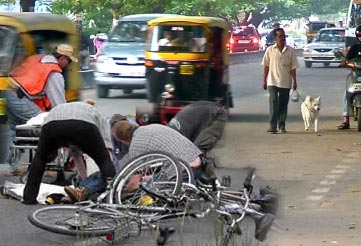
There's nothing better to cement a slight Monday morning depression into a really serious one than seeing two traffic accidents in a row on your way to work.

Obviously, if you consider the Tanzanian absolutely crazy driving style, bad roads and worse cars, accidents are to be expected. If you further consider that ambulences are so rare as to be able to count them on the fingers of one hand (and only available to expensive private health insurance schemes) and that perpetual traffic jam makes it impossible for them to pass through and reach the injured in time anyway, it will not surprise you that people don't even bother calling them. Ambulence, somehow, is not a realistic option.

Still, with all this considering, I find it really difficult to understand the behaviour of Tanzanians when an accident occurs. The guilty person, if uninjured, will usually run away for the fear of being beaten. If injured, or if guilt is not so obvious, endless discussions will start on all the specifics of the accident, what was done wrongly and by whom, and these discussions often end up in a real fight. Involved are all the people who stop to look on and they all find it absolutely necessary that they contribute their own opinions even if they did not see the accident in the first place.


A huge crowd usually gathers, people get loud and expressive, and (unlike on the photo above) there is only one person whom everyone forgets - the injured one! He usually lies on the groud somewhere close by and is attended to by noone. Nobody holds her hand, tries to console her - and honestly to good I have never seen a passing by person lift the injured one into his own car/bajaj/bus and drive him to the nearest hospital! Usually, many means of transport have gathered around the accident, yet noone has courage enough to bring the injured person to the doctor.

Why, I don't know. I just pray to God I will never have a road accident in Tanzania.

Reitwege und alte Luftabwehrmaschinen

Dieser Sonntag war wirklich sehr heiss und Stefan und ich haben uns entschlossen, zur Spitze von Dar es Salaam zu fahren, um quasi ein neues Gebiet zu erforschen. Da, am Beginn des Ozeans, gibt es nur riessig grosse Villas und die Spitze der Halbinsel ist sogar noch unbebaut. Toll, haben wir uns gesagt, muss ein Erholungs- und Sportgebiet fuer die Reichen sein, lass uns spazieren gehen!

Ein Gruengebiet bei dem Ozean? Super!
Die Hitze war gross und ich glaube das muss unsere Ausrede sein, wieso wir mit dem Denken aufgehoert haben. Der Spaziergang war definitiv einer von interesantesten den wir je gemacht haben!

Wir sind auf ein Nebenweg eingebogen, alles nur gruene Buesche, das Rauschen des Meeres in der Weite.

Ich habe gemeint, wie merkwuerdig, dass die Strassen hier, in der Mitte von nirgendswo, doch noch so gross sind. Und so gerade, waere ein super Reitweg.

Dann habe ich gemeint, na schau, all diese Gebaeude, ist was grosses, muss eine Schule sein. Sieht aber ziemlich verlassen aus, keine Kinder in Sicht. Stefan hat gemeint, lokale Haeuser, aber mit Klima, sie sind sicher nicht verlassen.

Schau da, ein Mensch, in Uniform!

Den Hint haetten wir beachten sollen...
Nach 5 Minuten von weiter gehen habe ich dann gemeint, wie schreklich, dass in Tanzania Altmetall, also Muell, auch ueberall liegt, und was das riessige Haufen von Rost wohl mal gewesen ist?

Stefan hat gemeint, schaut als Luftabwehr aus, aber er kann es ja nicht so genau sagen.

Jedenfalls war der Weiterweg zugewachsen, also sind wir umgedreht und wieder zurueckgegangen in der fuer Dar es Salaam ganz untypischer Stille und Verlassenheit.

Bis auf einmal drei Soldaten auf uns zugelaufen sind, mit boesen Mienen im Gesicht...

'Was macht ihr da, wazungu??? Wo seid ihr hergekommen??? Wie viele Minuten seid ihr schon hier??? Was habt ihr gesehen??? Habt ihr eine Kamera??? Jetzt werdet ihr eingesperrt!!! Gehen wir zum Buero, JETZT, SOFORT!!!'

Na, hat es sich rausgestellt, dass das Gebiet fuer die Oeffentlichkeit gesperrt ist, weil es eine Militaerbasis ist?  Wir waren auf verbotenem Grund! Ganz ahnungslos! Wieso denn auch eine Militaerbasis beschriften oder vielleicht sogar umzaeunen? Voellig unnotwendig!

Punkte gegen uns waren,
- dass Tanzanier nie aus Lust spazieren gehen und uns daher keiner geglaubt hat wir wollten nur ein bisschen rumspazieren,
- dass wir das urkleine Schildchen mit 'Voricht, Gefahr' uebersehen hatten, was den Soldaten voellig unglaublich erschienen ist,
- dass wir Weisse sind,
- dass ich sehr schlecht auf Verfhoere reagiere und nach 27-tem mal beantworten, 'wir waren nur spazieren', ein bisschen die Nerven verloren habe.

Punkte fuer uns waren,
- dass wir keine Kamera mithatten und der Soldat, der versucht hatte, Stefan's Handy zu knacken, es nicht geschafft hat und wollte das den anderen Soldaten nicht mitteilen,
- das wir nicht Briten sind (die sind anscheinend sehr gehasst),
- das wir Volontaere sind (das haben wir gesagt),
- das das TV Programm sehr interessant war und der Kommandant nicht zu lang gestoert werden wollte.

Ja, schliesslich haben sie sich unsere Telefonnummern aufgeschrieben, gesagt, 'Uende, Uondoka (Go, leave!)' und 'Don't ever come back'!

Schade, das war's wohl mit sonntaglichen Spaziergaengen beim Meer!

Donnerstag, 17. November 2011

Welteroberer

Zwei Produkte haben es geschafft: Coca Cola und Plastik haben ihren Weg in jeden tansanischen Haushalt gefunden!
Coca Cola ist zwar nicht das beliebteste Getränk Tansaniens (das wäre wohl Konyagi = Schnaps),  liegt aber knapp hinter Nummer Eins

Plastic planets, so nennen wir die Geschäfte mit Haushaltswaren

Going out

To have an evening of fun, we first need to drive in a bajaj or dala dala for about 50 min. Almost all the interesting venues are the same distance away. This involves a lot of bargaining for the price, some praying that the bajaj driver has put enough petrol in the tank and wind in the hair.

Concerts are usually what we in Europe refer to as 'world music', meaning that we listen to this or that african singer or group from the north, south, east or west of this huge beautiful continent.

Bismillahi Group, four Somalian ladies, their songs all sounded the same: a  beautiful intro that reminded me of French chancons, followed by a psychedellic repetition of one single verse and melody for about 10 min
It is mostly easy to get to know and hang out with the performers. They are pretty cool and almost all low-key.
Lost in the music!

There is a big crowd of people in front of the stage, and seeing the performer means having an elbow of an elderly mzungu in your face, the butt of the hip african lady next to yours, your legs intertwined with those of a young rasta smoking marihuana on your left and hopefully someone you know on your right. It smells of sweat and beer and after some songs everyone begins to dance, a weird ecclectic mixture of traditional african dances with modern western styles, some dancers more, some less talented, but united in music.

If you want to see, you need to climb over the balcony
Exactly like a concert night at Weltcafe in Vienna, right?

Sonntag, 13. November 2011

When I grow up, I want to be...

In the absence of flashy neon signs, sign writers (wachoraji) are still to be found on every corner of Dar es Salaam. They don't need much in terms of office, some colours, pencils and canvas suffice. They can write or draw whatever the customers wish...

On the canvas on the wall left: Menu of the Good luck restaurant: roasted goat meat...

A sophisticated educational work: paintings explaining the rights of women